
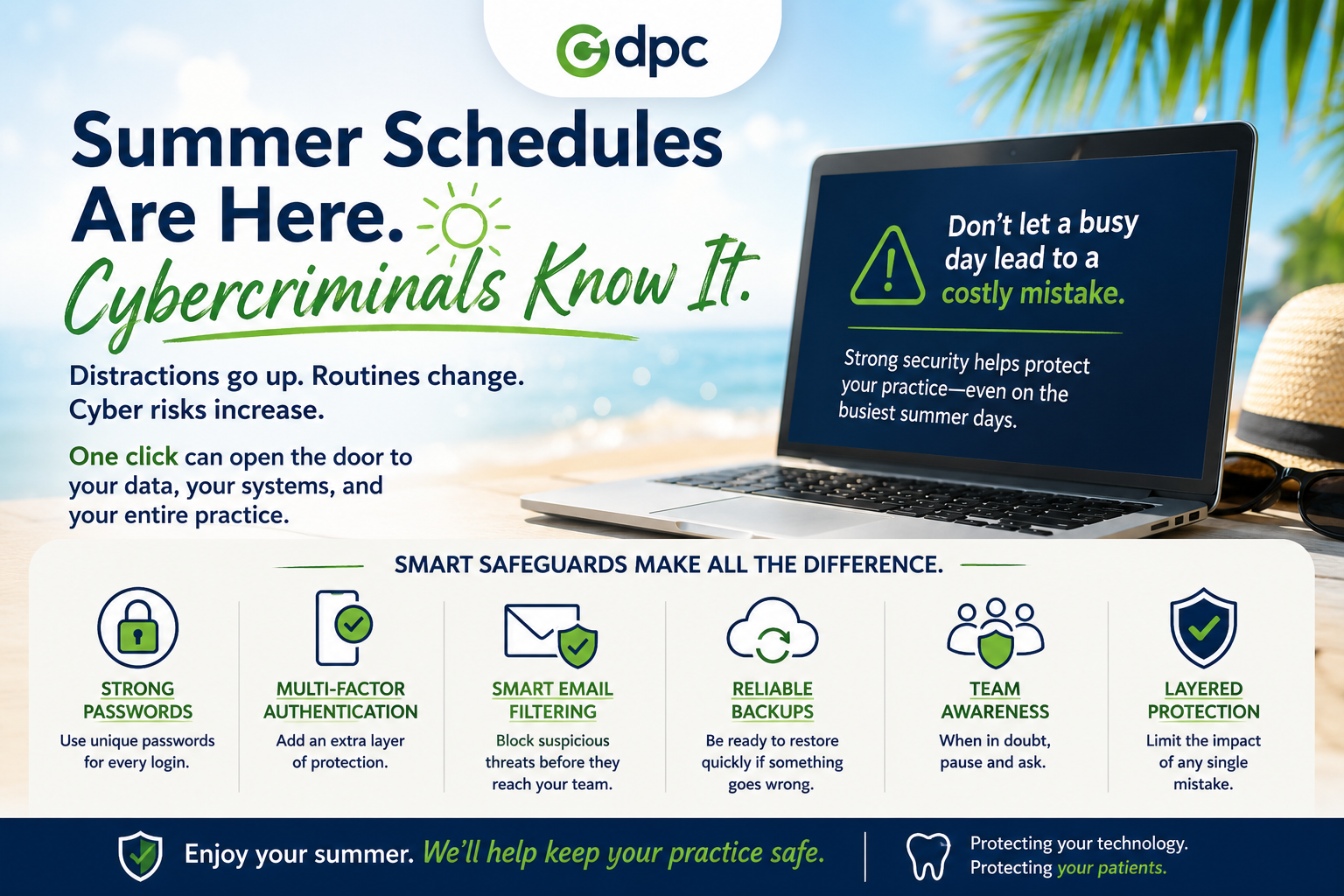
Summer Schedules Are Here. Cybercriminals Know It.
Summer is a welcome change of pace.
Kids are out of school. Vacations are on the calendar. Team members are taking well-deserved time off. And for many dental practices, schedules start looking a little different than they did just a few months ago.
Maybe you're adjusting coverage while someone is away. Maybe you're answering emails between patient appointments. Maybe you're working through a busy day while juggling summer camps, family activities, and everything else that comes with this season.
It's normal.
Unfortunately, cybercriminals know that too.
Why Summer Creates More Opportunities for Cyberattacks
Most cybersecurity incidents don't happen because someone isn't paying attention.
They happen because someone is busy.
And let's face it, summer tends to bring more distractions than usual.
The front desk is multitasking. Providers are moving from room to room. Managers are covering extra responsibilities. Everyone is trying to keep the day running smoothly.
That's when a suspicious email can slip through.
Not an obvious scam.
Something that looks routine:
- An invoice
- A file-sharing request
- A shipping notification
- A message that appears to come from a vendor
- An urgent request from someone inside the practice
The goal isn't to trick you when you're focused.
The goal is to catch you when you're moving fast.
One Click Can Reach More Than You Think
When someone clicks a malicious link or opens a dangerous attachment, the problem often extends far beyond that one device.
Today's dental practices rely on connected systems:
- Practice management software
- Patient communication platforms
- Cloud storage
- Financial systems
- Insurance portals
Once attackers gain access to one account, they often try to move deeper into the network.
What starts as a single click can quickly become:
- Stolen credentials
- Exposed patient information
- Locked files
- Operational disruptions
- Costly downtime
That's why cybersecurity isn't really about preventing every mistake.
It's about limiting what happens when mistakes occur.
Why "Be Careful" Isn't a Security Strategy
Every team wants to be cautious.
But no one can spend ten minutes investigating every email that lands in their inbox.
Your team is focused on patients, schedules, insurance questions, phone calls, and a hundred other priorities.
Security systems should account for that reality.
The most protected practices don't depend on perfect employees.
They build layers of protection around normal human behavior.
What Strong Protection Looks Like
A few simple safeguards can dramatically reduce risk:
✅ Multi-factor authentication on critical accounts
✅ Unique passwords for every login
✅ Email filtering that catches suspicious messages before they reach staff
✅ Regular security awareness training
✅ Reliable backups that can be restored if something goes wrong
✅ A clear process for reporting anything that feels suspicious
These tools help protect your practice when someone is having a busy day—which is most days.
A Good Time for a Quick Checkup
Summer doesn't create cybersecurity problems.
It simply makes existing vulnerabilities easier to overlook.
Ask yourself:
- Are all critical accounts protected with MFA?
- Do you know if your backups are working?
- Could one compromised password affect multiple systems?
- Would your team know what to do if something felt suspicious?
If those answers aren't completely clear, now is a great time to take a closer look.
Keep the Focus on Patients, Not Problems
Your team already has enough to manage this summer.
Technology and security shouldn't add to the stress.
At DPC Technology, we help dental practices put practical safeguards in place, so one distracted moment doesn't become a major disruption.
Because summer should be about family time, vacations, and caring for patients, not dealing with a cybersecurity incident.
If you are interested in hiring us to manage your IT infrastructure, please reach out to us here.